
About Me
The cultural frames that shape how I teach — where I come from, where I've taught, and how both keep informing the way I handle the hard conversations.
Cultural Frames
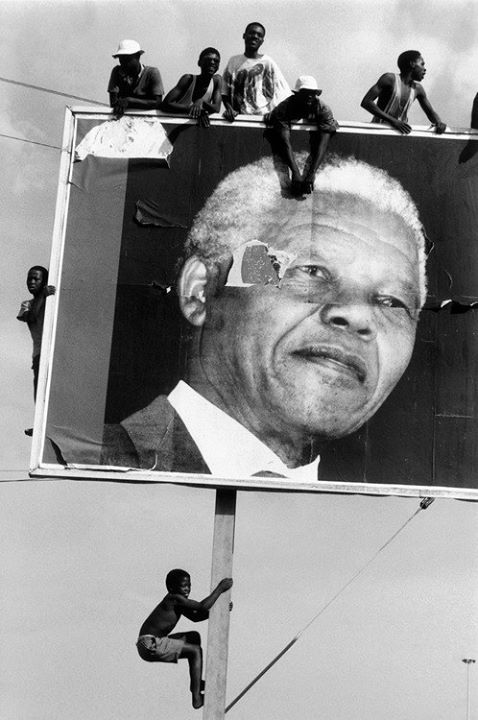
I grew up in post-apartheid South Africa, so diversity was simply the world as I knew it. That wasn't true for the generations before mine. What actually opened my eyes wasn't family stories alone, since those stayed personal and subjective no matter how many I heard growing up. It was a full semester in a social sciences classroom studying apartheid itself that turned those stories into something structural: systemic inequality, racism, classism, segregation, and a political regime the country is still recovering from decades later. Once I had that framework, I started seeing its residue everywhere, in multicultural classrooms and in classrooms that looked homogenous on the surface, all through the rest of my schooling.

Teaching in Thailand has shown me a different relationship to power in the classroom. The teaching profession here carries real respect, and so does the role itself, which means I haven't had to assert authority the way a lot of classroom management training assumes is necessary. My students are only a few years younger than me, they come in with years of etiquette training, and they largely respect each other without much intervention from me beyond setting the boundary.
I want to be honest about two things underneath that ease, rather than just noting it and moving on. First, growing up already immersed in diversity in South Africa means moving here as an expat has never really tested me the way genuine culture shock might. I blended into Thai culture without much friction, and that comfort is worth questioning rather than taking as proof that everything around me is equitable, it might just mean I've never been on the losing end of an unfamiliar environment. Second, some of the respect I get here isn't something I've earned through relationship-building the way a local teacher has to earn it. It's cultural, teachers are held in high regard as a matter of course, and I carry that unearned authority into every room regardless of what I've actually done yet to deserve it.
This observation comes from a specific context, university level students in one culture, and I don't expect it to hold the same way in a secondary classroom, where the students are younger and the dynamics are almost certainly different. But it has made me more attentive to how much of what gets labeled a discipline problem is really a mismatch between the environment and the culture students bring into it, rather than something wrong with the students themselves.
The place I actually get reminded of my own blind spots isn't the university classroom, where the ease I just described makes it easy to feel like I've got it figured out. It's the training centre, where the room might hold an engineer, a former movie star, a business owner, and a sponsored university student in the same session. Each of them carries a different relationship to authority, to being corrected, to what respect looks like, and I don't always read that correctly. I've caught myself defaulting to one register and adjusting only after I'd already misjudged someone's background or ability. It's a small-scale version of the same bias I'm asking my future students to examine at a much bigger historical scale, and a reminder that interrogating my own frame isn't a one-time realization, it's something I have to keep re-noticing in the room.
These experiences shape my teaching in a specific way. Because my own understanding of injustice only became real once someone gave me a structured, evidence based deep dive instead of a surface level acknowledgment that inequality exists, I want to teach difficult topics, segregation, systemic racism, human rights violations, the same way. Not softened into a single unit on diversity, but built into the actual structure of how I teach government, history, and civic life, using primary sources and multiple perspectives the way that semester did for me.
I also carry an awareness that not every student in front of me will share the same frame of reference I had growing up, or the same ease I've had moving through different cultural settings. Some students in my classroom will already carry direct or inherited experience with the issues we study, and some won't have thought about them at all. That's part of why my approach to building classroom relationships centers on routines for wide ranging, respectful discussion, listening across difference rather than assuming everyone starts from the same place. Concretely, it's also why I want to open a unit on a sensitive topic with a low-stakes written reflection or a quiet check-in on what students already carry into the room, rather than assuming they need the history introduced to them the way I needed it introduced to me.
To keep expanding my own frame, and to make sure I'm giving students more than one lens on the cornerstone topics of social studies, civil rights movements, government and citizenship, human rights, I've been drawing on a few specific resources. Facing History and Ourselves is built around exactly the kind of structured, evidence based approach to difficult histories that changed my own thinking, so it's a direct model for how I want to teach, not just what. The National Council for the Social Studies and its C3 Framework keep me anchored to what multiple perspectives actually looks like in practice, not just as a value statement. And because my own country's history is where this all started for me, I go back to the Nelson Mandela Foundation's archival material directly, since primary sources from South Africa's own transition are more honest than any secondhand summary, including my own. Growing up inside that history and choosing to keep responding to questions of equity, access, and justice is not something I've set aside for an international classroom. It's the same habit of mind, just applied somewhere new.

See where this comes from
Back to the trailhead, or on to the standards these reflections keep me honest against.
Back to the journey map